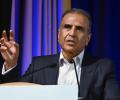
'If you are going to have only a handful of telecom players on whom the entire dream of Digital India rests, it's important they are financially sustainable.'

Ajit Mishra, vice president, Research, Religare Broking, answers your queries.

Airtel CEO said, the 5G ecosystem is yet to develop in India and the prices are very high. Telecom companies including Vodafone Idea (VI) and Reliance Jio have also said that the current prices are exorbitant.

The government is planning to roll out 5G testbed in early January to enable small and medium enterprises and other industry players to test their solutions on a working platform, a top Department of Telecom official said on Thursday. For the promotion of 5G indigenous technology, DoT in March 2018, had approved a multi-institute collaborative project to set up an indigenous 5G Test Bed at a total cost of Rs 224 crore. A testbed consists of a specific environment including hardware, software, operating system, and network configuration to test a product or service.

DoT still working on final AGR dues due to varying accounting practices. Telecom operators have been submitting two separate audited details of deduction towards interconnection usage charges and roaming fee to the DoT.
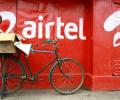
Six consecutive profitable quarters after an equal number of losses - for Bharti Airtel, the turnaround has been quick. But it is not a result of higher tariffs or absence of exceptional items alone. Execution and strategy are playing a part, too. Bharti Airtel's chief executive officer Gopal Vittal summed it up in a post-result conference call last month. "We track the profit in each of our 237,500 (cell) sites.

Prime Minister Narendra Modi on Saturday inaugurated the 6th India Mobile Congress at Pragati Maidan in Delhi and launched 5G services. The 5G telecom services seek to provide seamless coverage, high data rate, low latency and highly reliable communications system. The three major telecom operators of the country demonstrated one use case each in front of the prime minister to show the potential of 5G technology in India.

Ajit Mishra, vice president, Research, Religare Broking, answers your stock market queries.

According to JP Morgan, it seems that Jio is willing to go for the jugular in chasing market share if this hurts some of its standing rivals like Vodafone and Idea to a point from where they find it difficult to fight back.

Indian telecom operators have surpassed the three- year 5G network rollout target given to them within six months and now the government is making efforts to enhance adoption of 5G applications across various key segments, a senior government official said in Barcelona. Department of Telecom Additional Secretary VL Kantha Rao told PTI at "India Evening" event on the sidelines of Mobile World Congress 2023 that the government has hosted over 50 companies at the India pavilion and the delegation is here to showcase indigenously-developed 4G and 5G technology stack. "When the spectrum was allocated to telecom service providers for 5G rollout, we gave a minimum rollout obligation saying that within one year they have to cover a few cities within three years, a few towns and so on and so forth.
This is the biggest equity-raising exercise by an Indian corporate within a financial year. The fundraising - led by Citibank, Goldman, Kotak and Axis Capital as bankers - will see participation by foreign and domestic institutional investors.

Bindisha Sarang takes a look at Vodafone's RedX and Airtel's new plan.
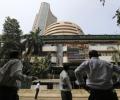
RIL became the first Indian company to hit the Rs 9.5 lakh-crore market capitalisation level. Shares of Bharti Airtel soared 7.36 per cent and Vodafone Idea rallied 34.68 per cent after both the companies announced a hike in mobile phone call and data charges from December.

The Cabinet approved giving Bharti Airtel, Vodafone Idea Ltd and Reliance Jio an option to avail of a two-year moratorium on payments they were supposed to make in yearly installments for the spectrum bought in auctions.

On the Sensex chart, Bharti Airtel was the biggest loser with nearly 3 per cent drop in its share price. It was followed by IndusInd Bank, Maruti Suzuki, HeroMoto Corp and Tata Steel.

Tamil Nadu cadre IAS officer K Rajaraman on Friday took charge as the new telecom secretary. His joining comes following the superannuation of Anshu Prakash on September 30. "Shri K Rajaraman, IAS (TN:89) takes charge as Secretary, @DoT_India in presence of senior officials of the department," a PIB tweet said. He was serving as the additional secretary for investments at the Department of Economic Affairs before being promoted to the position of secretary, DoT.

In percentage terms, IndusInd Bank, SBI, HDFC, ICICI Bank and L&T were among the top losers. On the contrary, Bharti Airtel, Reliance, Sun Pharma, HCL Tech and Maruti Suzuki emerged as major gainers.
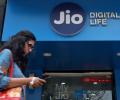
India's first auction of telecom spectrum in five years ended on Tuesday with Rs 77,814.80 crore of airwaves being bought, mostly by billionaire Mukesh Ambani's Reliance Jio. Over 2,250 MHz of spectrum, that carry telecom signals, in seven bands worth nearly Rs 4 lakh crore at the reserve or start price, was offered for bidding in the auction that began on Monday. Telecom secretary Anshu Prakash said 855.60 MHz of spectrum was bought for Rs 77,814.80 crore in the two-day auction.

India's telecom sector has been through dizzying peaks, troughs, policy U-turns, court battles, brutal competition, and daily controversies. India could go back to a private sector duopoly with just Reliance Jio and Bharti Airtel surviving the mayhem. The third player, Vodafone Idea, could be history.

Vodafone-Idea is working on a multi-pronged strategy to begin its long journey to get back in the game but much hinges on how much money it can raise following the government's decision to go for equity conversion last week. Based on discussions with sources aware of the company developments and with vendors, VIL's immediate plan is to invest in increasing 4G coverage to the level of its competitors. Currently, it covers a 1 billion population with 4G while its competitors cover 1.2 billion people.
Reliance Jio's aggressive target to reach 100 million households through the launch of the 5G fixed wireless access (FWA) could make it one of the world's largest players in this space. But this also marks a change from its earlier strategy of offering fibre-to-the home (FTTH) broadband to households. Despite its best efforts, in two years Jio has been able to connect only 7 million households with FTTH, as permission for right of way for the last mile became a major impediment and the process of laying ducts for the roll-out was slow and cumbersome.

Telecom operator Bharti Airtel on Monday announced 20-25 per cent tariff hikes for various prepaid offerings, including tariffed voice plans, unlimited voice bundles and data top-ups, and said the new rates will come into effect from November 26. The entry-level tariffed voice plan has been raised by about 25 per cent, while for unlimited voice bundles, the increase in most cases is about 20 per cent. Sunil Mittal led telco -- whose India mobile customer base stood at about 323 million at the last count -- has also increased the tariffs for data top-up plans by about 20-21 per cent

Commercial 5G services will be rolled out in 13 cities in India, including the metropolises, in 2022, the Department of Telecommunications (DoT) said in a statement on Monday. These cities are Delhi, Gurugram, Mumbai, Pune, Chennai, Kolkata, Bengaluru, Hyderabad, Chandigarh, Lucknow, Ahmedabad, Gandhinagar, and Jamnagar. "These metros and big cities would be the first places for the launch of 5G services in the country next year," the DoT said.
Supreme Court had on October 24 upheld government contention that non-core revenue in telecoms groups should be included in adjusted gross revenue. According to DoT's calculations, Bharti Airtel faces a liability of around Rs 42,000 crore after including licence fees and spectrum usage charges while Vodafone-Idea may have to pay about Rs 40,000 crore.

Mobile operators with the exception of Reliance Jio are in a much worse financial condition than expected earlier. The combined borrowing of the four incumbent operators - Bharti Airtel, Vodafone Idea, Bharat Sanchar Nigam (BSNL), and Mahanagar Telephone Nigam (MTNL) - reached an all-time high of Rs 3.85 trillion at the end of March this year. The companies' combined debt was up 22.4 per cent year-on-year last financial year against 8.3 per cent growth in their borrowing in the previous year. As a result, the incumbent operators' debt-equity ratio shot up to an unsustainably high level of 6.83X at the end of March this year from 2.3X at the end of March 2020. This was largely due to big losses reported by all these companies last financial year. The four incumbent operators racked up combined net losses of Rs 70,000 crore in FY21.

Jio makes data on call drops public, says 121 mn calls failed in a day

Over the past one-and-half years, the number of stocks trading below their respective face value has increased 29 per cent after a sharp correction in stocks of small-cap companies.

In this round, the market has won. But it is still for Gautam Adani to decide whether he has lost or not, argues Shekhar Gupta.
Airtel, Vodafone, BSNL increase subscriber share while Idea manages to retain


Sources at the department of telecommunications confirmed that Bharti Airtel has submitted application to bid for airwaves frequencies at pan-India level.

Idea, Reliance and BSNL have call drop rates in the range of 10 per cent or above.

Telecom operator Vodafone has been the top gainer of customers through mobile number portability facility while Reliance Communications is the biggest loser.

Tata Consultancy Services (TCS) is India's most-valuable brand in 2022 replacing HDFC Bank, which held the number one spot since 2014, according to Kantar BrandZ report on India's most-valuable brands. TCS was able to grab the top slot due to rising global demand for automation and digital transformation, following the pandemic. Indian brands have bounced back from the pandemic to increase their brand value by 35 per cent compound annual growth rate (CAGR) since 2020.

Jio's global partnerships took shape this year when Jio Platforms, a 100 per cent subsidiary of Reliance Jio which has invested in various digital platforms, was able to woo a bevy of marquee investors: Facebook, Google, Qualcomm, Intel, and a numerous PE funds.

All Sensex components ended in green, with Bajaj Finserv, HCL Tech, Bharti Airtel, IndusInd Bank, L&T, TCS, ONGC and ICICI Bank, Bajaj Finance and SBI gaining up to 6.64 per cent.
It came as a surprise to all stakeholders - competing telecom companies (telcos), most analysts and even the government's internal projections on revenues from the 5G auctions. Reliance Jio disrupted all calculations by paying a stiff Rs 40,000 crore to buy 10 MHz of spectrum in the 700-MHz band, globally considered a key band for efficient 5G service coverage, along with the default 3.5 GHz band and the ultra-high speed and low-latency millimetre band of 26 GHz band. So what made Jio pay almost 45 per cent of its total spend in this auction for the 700 MHz band - much more than what it rustled up even for the 3.5 GHz band?

The launch of Reliance Jio Infocomm Ltd last September, particularly the tariff war it has unleashed on its competitors, has deepened the crisis facing India's telecom sector. One offshoot of this is the major drop in earnings reported by industry leaders Bharti Airtel and Idea Cellular with each passing quarter. Aslam Hunani/Rediff.com tells the story in numbers.

The move will help telcos, including Reliance Jio, Vodafone, and Idea Cellular
.jpg)
RCom slashed 3G prices for all kind of connections -- pre-paid, post-paid, new and old -- across 13 circles where its third-generation services are available.
 © 2026 Rediff.com - Advertise with us - Disclaimer - Privacy Policy - Sitemap - Feedback - About us - Terms of use - Grievances